If you've spent any time near creative-habit advice, you know Morning Pages. Julia Cameron introduced them in The Artist's Way back in 1992: three pages of longhand, stream-of-consciousness writing, done first thing, every morning, before the day gets its hands on you. They're not meant to be good. They're not meant to be read. They're a clearing — you write whatever's rattling around until the rattling stops.
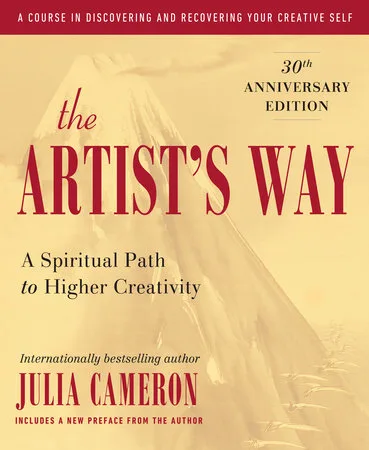
Julia Cameron's The Artist's Way (1992) made Morning Pages a daily ritual for millions. Cover via Penguin Random House.
It is a genuinely great practice. I believed in it completely. I also could not make myself do it.
The friction was the hand
Here's the thing nobody tells you about Morning Pages: the bottleneck isn't your mind, it's your wrist. The "longhand" part is load-bearing in Cameron's method — she's adamant the slowness is the point, that handwriting keeps you honest and present. And for a lot of people it works exactly as she says.
But look at the raw numbers. Most of us speak at around 130 to 150 words a minute. We type at maybe 40. And we handwrite at roughly 13. So three handwritten pages — call it 750 words — is the better part of an hour of cramped, aching scrawl when your brain finished the actual thinking in five minutes. My mind would sprint and my hand would trudge, and somewhere on page two the thought I was chasing would simply leave, because the point I wanted to make was already gone by the time my fingers caught up.
I didn't quit Morning Pages because I stopped believing in them. I quit because the medium was fighting me. So I changed the medium.
Walk first. The ideas show up.
The swap started with a different problem — I sit too much — and accidentally solved the first one. Instead of reaching for the notebook, I'd put on shoes and walk a short loop around the block while I "did" the pages out loud.
It turns out this isn't just a vibe. In a 2014 Stanford study with the wonderful title "Give Your Ideas Some Legs," Marily Oppezzo and Daniel Schwartz found that walking boosted people's creative output by an average of 60 percent compared with sitting — specifically the divergent, idea-generating kind of thinking, which is exactly what a brain-clearing morning ritual is for. The effect held whether people walked outdoors or on a treadmill facing a blank wall. The movement itself was doing the work.
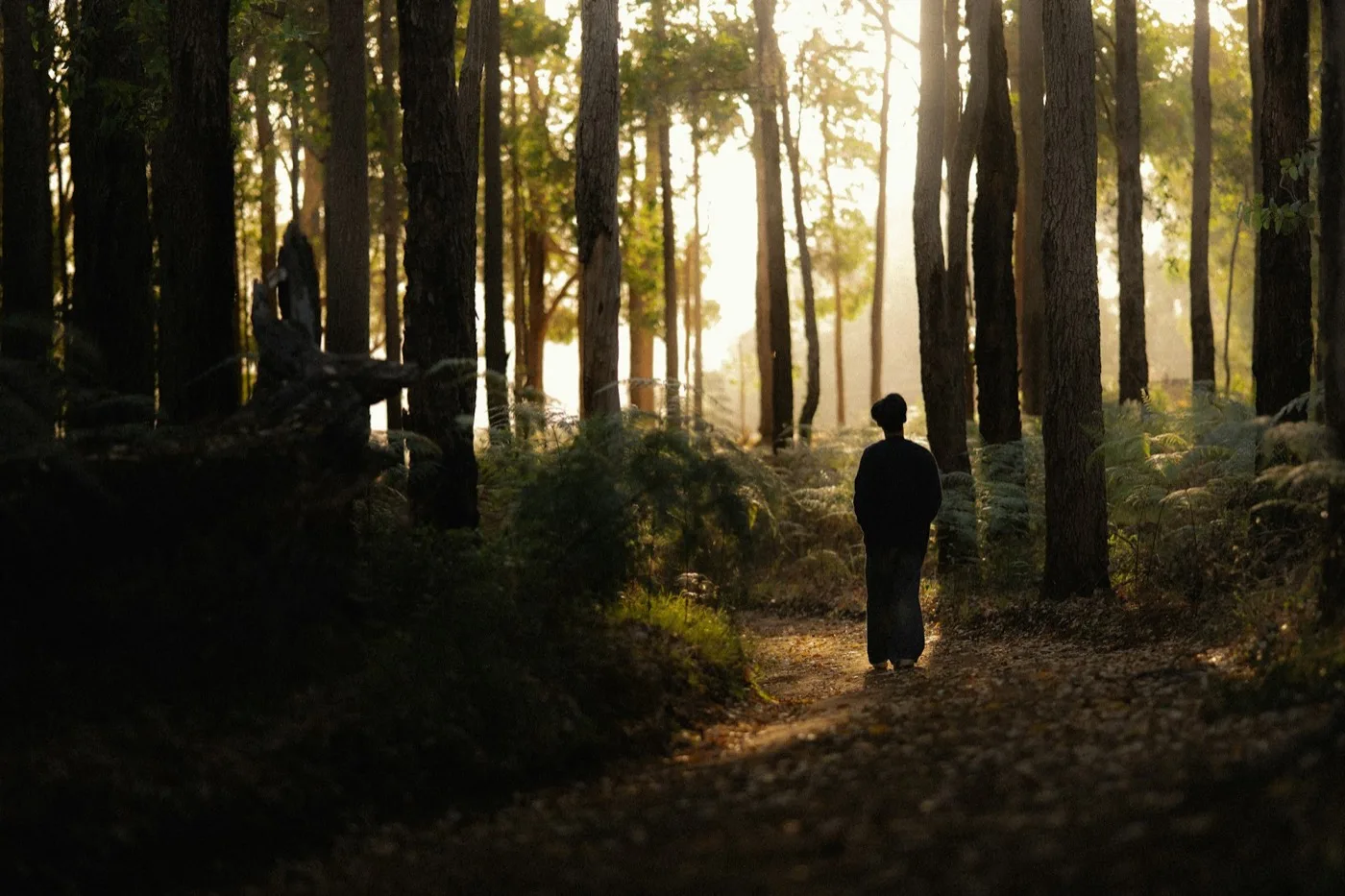
Twelve minutes on a path beats three pages at a desk, at least for me. Stanford clocked walking at a 60% average lift in creative output. Photo by Ewan Z on Unsplash.
So now the practice was: walk, talk, let it flow. But talking into the void doesn't leave you with pages. That's where the last piece comes in — and it's the part that has to be done carefully, because of what these pages are.
The workflow, exactly
Here's what I actually do, every morning, in about twelve minutes:
- Shoes on, out the door, no phone-checking. The rule that makes it work is the same as Cameron's: do it before the day starts talking back. No email, no feed. Just the loop.
- Start dictating into a plain note. I press the dictation hotkey on my phone or — more often — I do this loop at my desk-adjacent back step and run it straight into a note on my Mac. Then I just talk. Whatever's there. The dog, the dread, the half-formed idea for the thing I'm avoiding.
- Don't perform. Ramble. Cameron's permission applies double here: there is no wrong way to do them. Say "um." Contradict yourself. Trail off. The transcript is for you and only you, so let it be a mess.
- Let it transcribe locally, then leave it. By the time I'm back inside, the text is sitting there waiting. I don't edit it. I don't reread it that minute.
- Read it once, later. Around lunch I'll skim what I said. Maybe twice a week there's a sentence in there worth keeping — a real thought I didn't know I had until I heard myself say it. That's the whole payoff. The other days, the value was just the clearing.
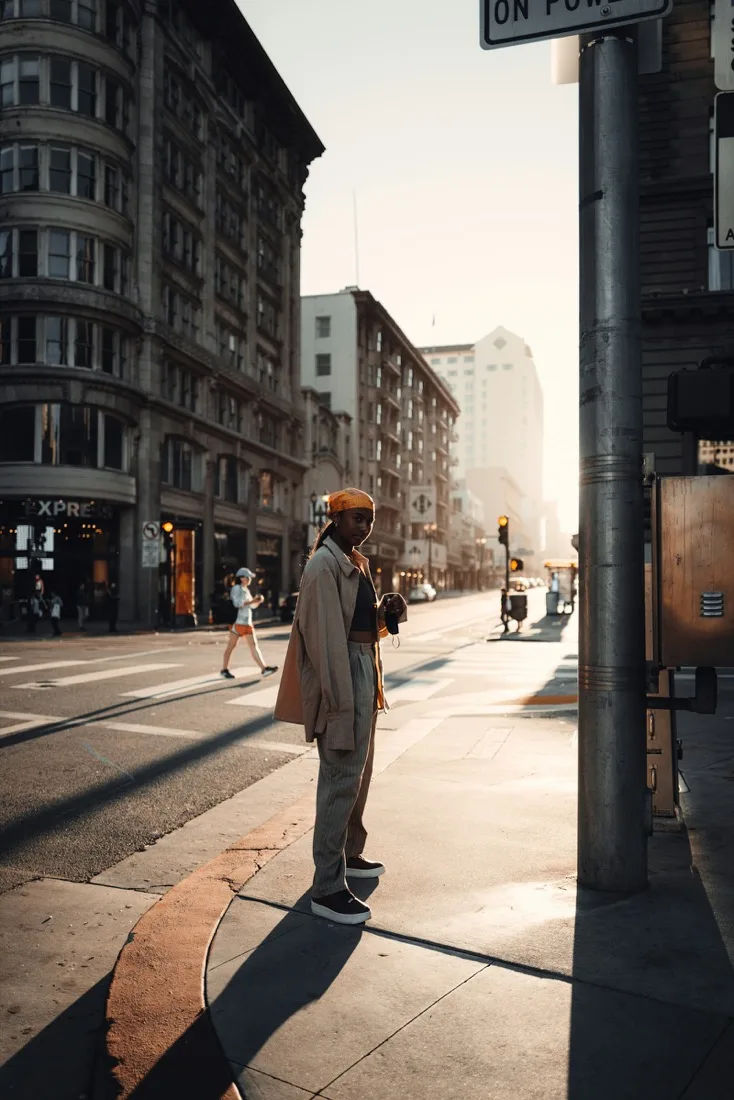
Talk, don't write — let a local dictation tool catch the stream of consciousness while you move. Photo by Robbie on Unsplash.
Why the "local" part is non-negotiable
This is the bit I feel strongly about, and it's why I'd never tell you to do this with a cloud dictation app. Morning Pages are, by design, your most unguarded thinking — the resentments, the fears, the embarrassing half-ideas you'd never say to another person. The entire practice depends on you believing no one is listening.
The moment that transcript runs through somebody's server, that belief is a lie. Most "voice-to-text AI" tools send your audio to the cloud by default, store it, and reserve the right to train on it. I build a Mac dictation app, so I'll be plain about my bias: I made EmberType precisely so this kind of thing never has to leave your Mac. By default it runs Whisper entirely on your own Mac — no account, no upload, no audio leaving the machine. (Cloud models exist, but only if you add your own API key. For this, don't.) You can pull the Wi-Fi and it still works, which is the only proof that matters. For a morning brain-dump, "it never left the Mac" is the only privacy setting worth trusting.
What you lose, honestly
I won't pretend this is strictly better than Cameron's version. It isn't — it's a trade.
You lose the meditative drag of the pen, the small ceremony of the notebook, the way handwriting forces a slower gear. Some people need that gear; if you're one of them, keep your pen and ignore me. And talking your unfiltered thoughts out loud feels strange for the first week, especially if anyone's within earshot. There's a reason I do my loop where no one is.
But what you gain is that the practice actually happens. A worse method you do every day beats a perfect method you abandon by Wednesday. For three years the notebook won the argument and lost the habit. The walk wins both.
Cameron's real insight was never "longhand." It was "we discover an inner voice that speaks to us with greater and greater clarity." She meant it as a metaphor. Turns out it works just as well literally.
Talk your morning pages. Keep them yours.
EmberType runs Whisper AI on your Mac by default — press a hotkey, talk, and with its local models your words land as text without ever touching the cloud. The most private place to think out loud.
Download EmberType Free7-day trial. $39 one-time after. macOS 14+, Apple Silicon. No account. On-device by default.
Free Mac Dictation Tips
Voice journaling, dictation workflows, and small habits that stick. No spam.
Unsubscribe anytime. We never share your email.
You're in! Check your inbox.